
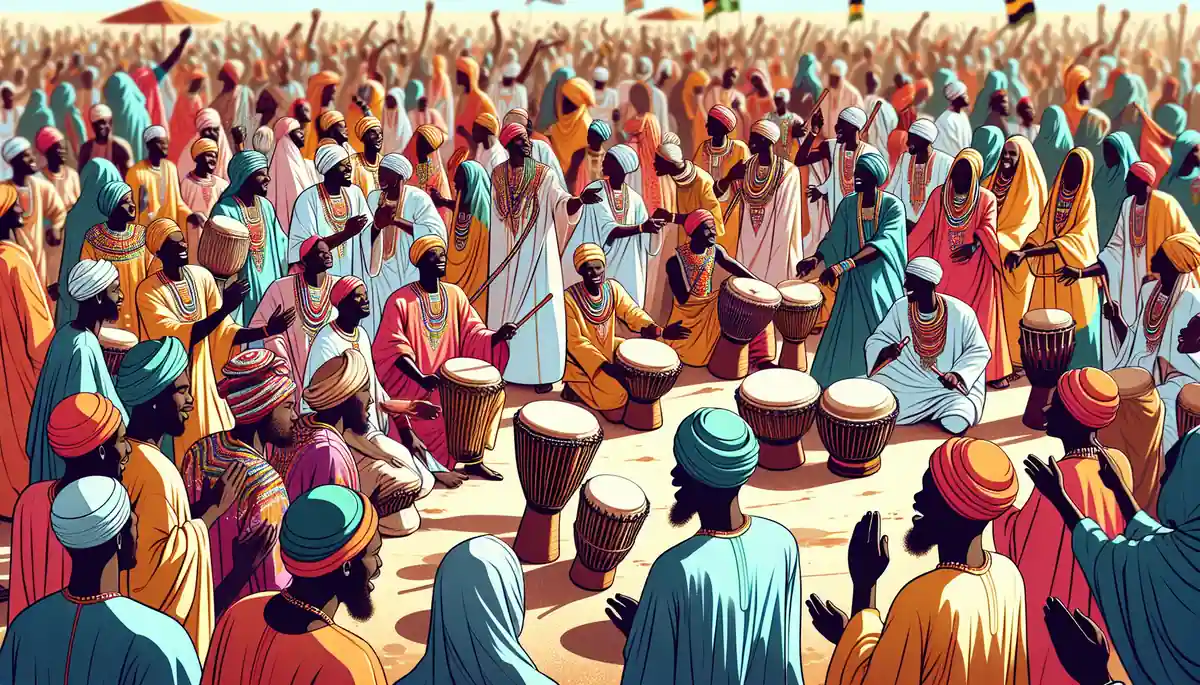
In East Africa, an event is never “just” an event. It’s a social ritual, a moment when families come together, communities bond, and traditions pass through generations.
Whether you’re Rwandan planning a Gusaba, Congolese preparing a dowry, or Burundian organizing an Ukwiherera, understanding traditions isn’t optional – it’s the foundation of any successful celebration.
This guide explores the major ceremonies of the region, their deep meanings, and how to honor them in a modern context.
The Gusaba: The Cornerstone of Rwandan Marriage
The Gusaba (literally “to ask”) is much more than a marriage proposal. It’s an elaborate cultural negotiation between two families, a codified social spectacle that can last several hours.
How a traditional Gusaba unfolds
- The groom’s delegation arrives: The future husband arrives with his family, friends and a designated spokesperson (the umukobwa). The entrance is theatrical – the bride’s family may even “refuse” to open the gate at first, adding suspense.
- Verbal exchanges: The groom’s spokesperson presents the request eloquently, often in proverbs and metaphors. The bride’s representative responds with wit. It’s a real oratory duel.
- Gift presentation (Inkwano): Traditionally, the groom’s family brings cows, banana beer (urwagwa), and other gifts. Today, gifts often include modern goods while respecting the symbolism.
- The bride’s “appearance”: After negotiation, the bride is presented among other veiled women. The groom must “recognize” her – a moment of intense emotion.
- Final agreement: The two families seal the union, share traditional beer and dance together.
Modernizing the Gusaba without denaturing it
In 2026, many couples are adapting the Gusaba:
- Venue: From family home to specifically decorated halls
- Attire: Traditional Mushanana with contemporary touches (Rwandan designer fabrics)
- Documentation: Professional photographers and videographers to capture every moment
- Invitations: Digital sending with detailed ceremony program
- Contributions: Mobile Money for distant family members
“The Gusaba is the soul of our marriage. Modernity is in the form, never in the essence.” – Couple married in Kigali, 2025
Congolese Celebrations: Grandeur and Generosity
In the Democratic Republic of Congo, celebrations are known for their scale, music and generosity. Congolese events have their own unique codes.
The Congolese Dowry
The dowry in DRC is a multi-stage process:
- Pre-dowry (Liaison): First official meeting between the two families. The future husband is “presented” and the bride’s family expresses their expectations.
- Official dowry: Formal ceremony where gifts are presented – often material goods, money, and symbolic objects defined by the bride’s family.
- Celebration: Party with Congolese music, dancing, and abundant food. Rumba and ndombolo are essential!
The Specificity: Musical Entertainment
Impossible to imagine a Congolese celebration without live music. Orchestras or Congolese music groups are the heart of the event:
- Rumba: For emotional and couple moments
- Ndombolo / Soukous: To get the whole assembly dancing
- Congolese Gospel: For spiritual moments
- Generics: Songs composed especially for the couple or event
The music budget in a Congolese event can represent up to 25-30% of the total budget – compared to 10-15% in other cultures of the region.
Burundi: The Ukwiherera and Sacred Drums
Burundi has one of the most poetic event traditions in East Africa, deeply linked to royal drums (Ingoma).
The Ukwiherera: The Bride’s Retreat
A tradition unique to Burundi, the Ukwiherera is a retreat period for the bride before marriage:
- The bride withdraws to elderly women in the family
- She receives teachings about marital life
- Her skin is prepared with traditional natural products
- It’s a rite of passage, not just aesthetic preparation
Drums in Celebrations
The Burundian drums, inscribed on UNESCO’s intangible heritage list, accompany great celebrations:
- Royal and prestigious weddings: Drum players open the ceremony
- National celebrations: Inseparable from Burundian identity
- Baptisms and births: Announcement of joy to the community
Elements Common to All East African Celebrations
Despite cultural differences, certain elements are universal in the region:
1. Community First
An event never belongs to just one person. It’s a community project. Neighbors cook, uncles manage logistics, aunts welcome guests. This solidarity is the most precious asset of our cultures.
2. Food is a Language
The quantity AND quality of food communicate the level of respect for guests:
- Rwanda: Brochettes, isombe, ibihaza, umutsima
- DRC: Chicken moambe, fumbwa, chikwangue, makemba
- Burundi: Brochettes, red beans, plantains, ibijumbu
3. Music is Sacred
No celebration without music. It marks every moment: guest arrivals, speeches, dancing, departure. It tells the story of the day.
4. Contributions are a Social Duty
Contributing to an event isn’t a choice – it’s a reciprocal social commitment. “Gutabara” (helping) in Rwanda, “Likelemba” in DRC – the concepts are different but the principle is the same: today I give, tomorrow I receive.
Preserving Traditions in the Digital Age
Technology doesn’t threaten our traditions – it amplifies them. Here’s how:
- Digital invitations allow inviting the diaspora who would have been excluded otherwise
- Mobile Money allows relatives abroad to contribute as if they were present
- Live video allows elders who can’t travel to participate
- Digital photos preserve moments for future generations
- Platforms like SHEREHE structure logistics without touching the soul of the celebration
Technology serves tradition, never the reverse.
Frequently Asked Questions
Can we combine traditions from two different cultures in the same wedding?
Absolutely! Intercultural weddings (Rwanda-DRC, Burundi-Rwanda, etc.) are increasingly common. The key is to consult both families beforehand and dedicate a specific moment to each tradition. SHEREHE helps structure these multi-cultural celebrations.
How do we involve the diaspora in traditions?
Video streaming, Mobile Money contributions, and recorded voice messages allow the diaspora to participate actively. Some couples even organize a “second Gusaba” in Europe for expatriate family.
Do traditions change with new generations?
Yes, and it’s natural. Young couples preserve the essence (family respect, rites of passage, community solidarity) while adapting the form (modern venues, fusion music, digital invitations). It’s evolution, not loss.
Celebrate Your Traditions with SHEREHE
Organize your Gusaba, your dowry or your family celebration with modern tools that respect your traditions.